
Search Results
Keyword:El

U.S. STREAMLINE Project Advances Nuclear Quantum Many-Body Research with Artificial Intelligence
On August 25, 2026, a new project named STREAMLINE is combining artificial intelligence, machine learning, and supercomputing to address the nuclear quantum many-body problem in nuclear physics research, aiming to more accurately simulate the interactions between protons and neutrons within atomic nuclei and provide theoretical support for frontier topics such as neutron stars and fundamental interactions. The difficulty of the nuclear quantum many-body problem lies in the fact that as the number of particles increases, the possible interactions among them grow rapidly, and traditional computational methods quickly hit the ceiling of computing power. Even with high-performance supercomputers, only quantum systems of relatively limited scale can typically be handled. The STREAMLINE project hopes to...
2026-08-26

Target Image of "Artificial Sun" China Huanliu-4 Released
The 2026 Fusion Energy Conference and Fusion Energy Week opened in Shanghai on the 25th. The target image of the "Artificial Sun" China Huanliu-4 was released at the opening ceremony. China Huanliu-4 is a fourth-generation magnetic confinement fusion large-scale scientific experimental device and the world's first high-temperature superconducting strong-field steady-state burning experimental platform. It will systematically verify the reliability of high-temperature superconducting strong-field magnets in complex fusion environments, demonstrate full-domain intelligent control of fusion reactors, and achieve long-duration steady-state operation of the device. Fusion energy is an important direction for the future development of human energy, and major countries around the world are competing to position themselves in the new track of fusion energy. Zhang Guangjun, Vice Minister of Science and Technology, pointed out on the same day that the 15th Five-Year Plan will incorporate controlled nuclear fusion as a future energy technology into key directions for energy innovation development, and list controlled nuclear fusion as a major national frontier science and technology project.
2026-08-26

U.S. HFIR Research Reactor Boosts Validation of New Nuclear Fuels
The High Flux Isotope Reactor (HFIR) at the U.S. Department of Energy's (DOE) Oak Ridge National Laboratory (ORNL) is becoming a key facility in the U.S. research, development, and qualification system for new nuclear fuels. A research paper published on August 25 noted that amid growing demand for new commercial nuclear power and advanced reactor construction in the United States, research reactor resources available for new fuel testing are becoming strained, and HFIR is expected to help alleviate the shortage of related testing capabilities. Image credit: Gunes Ozcan/Oak Ridge National Laboratory, U.S. Department of Energy. HFIR is one of the world's highest-flux steady-state research reactors and has long been used for nuclear fuel and materials irradiation testing. The paper recognizes...
2026-08-26
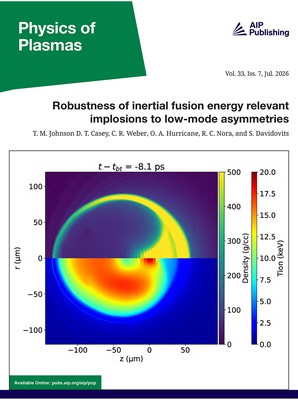
U.S. Research Reveals Diamond Melting Mechanism at High Pressure, Potentially Enhancing Inertial Confinement Fusion Performance
A research team at Lawrence Livermore National Laboratory (LLNL) in the U.S. recently published a study in Nature Physics reporting that the latest dynamic compression experiments have, for the first time, directly recorded atomic structural changes during diamond melting under extreme high pressure. The experiments showed that under high-pressure conditions, solid diamond can float in liquid metallic carbon, similar to ice floating on water. Diamond is not only a high-hardness carbon material but is also used as the fuel target capsule shell in inertial confinement fusion experiments. When intense lasers drive the capsule implosion, the compression and melting behavior of the diamond shell can affect whether the fusion fuel reaches the required high-temperature, high-pressure state. Meanwhile, the planetary science community has long focused on the high-pressure behavior of carbon in the deep interiors of ice giant planets...
2026-08-26
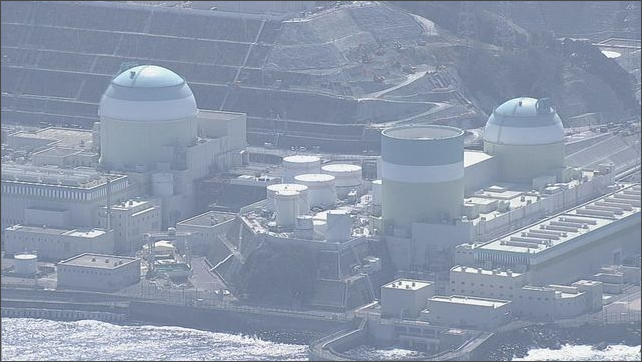
Bitumen Solidification Facility at Unit 2 of Japan's Ikata Nuclear Power Plant Returns to Normal
Shikoku Electric Power Co. reported on August 25, 2026, that the bitumen solidification facility at Unit 2 of Japan's Ikata Nuclear Power Plant, currently in a decommissioned state, had returned to normal operation at 10:45 a.m. that day. The gasket at the joint of the mixer top cover, where the earlier abnormality had been detected, had been replaced, and trial operation results showed no abnormalities. The incident occurred on April 28. On that day, when operators started the bitumen solidification facility in the controlled area of the reactor auxiliary building, they observed a steam-like phenomenon near the mixer thermometer, which subsequently disappeared on its own. Maintenance personnel later inspected and confirmed at 3:05 p.m. that the steam-like gas originated from inside the mixer and had escaped through the joint of the mixer top cover; at 5:06 p.m., the bitumen solidification facility was shut down.
2026-08-26

Four Units of Egypt's Dabaa Nuclear Power Plant Under Simultaneous Construction
Alexey Likhachev, President of Rosatom, and Mahmoud Esmat, Egypt's Minister of Electricity and Renewable Energy, recently discussed the construction progress of the Dabaa Nuclear Power Plant. As Egypt's first nuclear power plant, the Dabaa project is planned to feature four VVER-1200 reactor units, which are expected to provide electricity for approximately 20 million people once completed. Likhachev stated that the project has entered a critical construction phase, with all four units progressing simultaneously. Among them, Unit 1 serves as the pilot unit for the project and is scheduled to be connected to the grid in 2028. To achieve this goal, the project team still needs to complete several tasks, including the delivery of nuclear fuel in 2027.
2026-08-26

Tescan Launches MIRA XR Ultra-High-Resolution Scanning Electron Microscope for Materials Characterization and Failure Analysis Applications
Tescan recently launched the MIRA XR ultra-high-resolution scanning electron microscope system, targeting materials characterization needs in fields such as battery technology, metallurgy, and advanced materials science. Positioned between the Tescan MIRA and Tescan CLARA, the system aims to deliver higher resolution, enhanced surface sensitivity, and a more streamlined workflow, serving applications including R&D laboratories, industrial quality control, and failure analysis. According to reports, the MIRA XR employs BrightBeam™ technology and a single high-efficiency axial detector to improve surface signal acquisition under field-free imaging conditions, making it suitable for beam-sensitive materials and magnetic samples while reducing the need for sample preparation steps such as surface coating. The system also features an aperture-free column design that minimizes manual aperture selection and adjustment steps, allowing operators to focus more on sample observation and data analysis.
2026-08-26
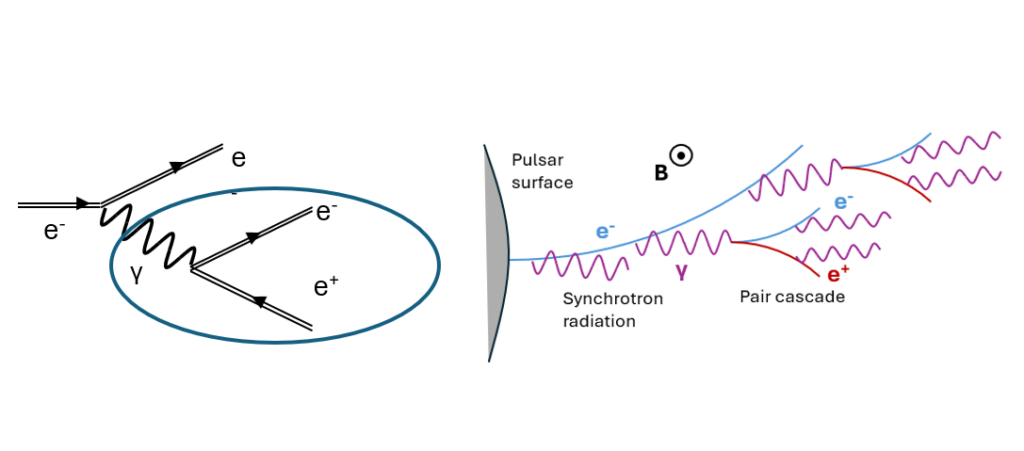
Lancaster University in the UK receives EPSRC funding to study antimatter production in intense laser pulses
Christopher Arran, a lecturer at Lancaster University and the Cockcroft Institute in the UK, has recently been awarded a three-year New Investigator Award from the UK Engineering and Physical Sciences Research Council (EPSRC) to study electron-positron pair production in the extremely intense electromagnetic fields of high-power lasers. The research focuses on matter-antimatter production processes under intense laser pulse conditions. Similar interactions are believed to exist in extreme cosmic environments, such as near pulsars and black hole accretion disks. Previously, such interactions had only been measured at large particle accelerator facilities such as Stanford University and the European Organization for Nuclear Research (CERN), but the electric and magnetic field strengths used in those experiments were far weaker than the strong-field conditions achievable with current high-power lasers.
2026-08-26

IsoEnergy Signs Agreement with Kineepik Métis Local to Advance Uranium Exploration in Saskatchewan, Canada
On August 24, 2026, IsoEnergy Ltd. announced that it has signed an exploration agreement with Kineepik Métis Local Inc. to support its responsible uranium exploration activities in Saskatchewan, Canada. Under the agreement, the two parties will establish mechanisms for ongoing communication, information sharing, and collaboration around IsoEnergy's exploration activities in the relevant region. The agreement also provides that Kineepik community members and local businesses may participate in exploration-related work through business partnerships, employment opportunities, and training programs. Kineepik Métis Local Inc. represents Métis rights holders residing within the Kineepik use and occupancy area, including...
2026-08-26

U.S. Develops Hybrid Process Combining Electroforming and 3D Printing for Critical Component Manufacturing in Advanced Nuclear Reactors
On August 24, local time, the U.S. Department of Energy's Oak Ridge National Laboratory (ORNL) announced that its scientists are collaborating with AJ Tuck Company (AJ Tuck) to develop a hybrid manufacturing process that combines 3D printing and electroforming to produce complex, leak-tight hot isostatic pressing canisters for powder metallurgy hot isostatic pressing processes. The process targets the manufacturing of critical metal components for advanced nuclear reactors and other energy and defense applications, with the goal of shortening production workflows and reducing reliance on traditional large-scale forging and casting supply chains. A hot isostatic pressing canister is a type of sealed container used to compact metal powders into high-performance metal components under high temperature and high pressure. Traditional hot...
2026-08-26

Electron Beam Processing Can Reduce Poultry Pathogens, Study Shows Turkey Meat Quality Remains Well Preserved
A study on electron beam treatment of poultry meat products shows that electron beam irradiation has the potential to reduce the risk of foodborne pathogens in poultry while preserving meat quality as much as possible. The paper, titled "Effects of Electron Beam (eBeam) Treatment on the Texture and Sensory Attributes of Chicken and Turkey Meat Batters," was published in the journal Poultry Science. Electron beam is a non-thermal processing technology that uses high-energy electrons to cause irreversible damage to pathogen DNA or RNA, making it difficult for bacteria to replicate. Like X-rays and gamma rays, electron beam has been approved by the U.S. Food and Drug Administration for cold pasteurization that does not rely on heating. The research team used the electron beam irradiation facility at Texas A&M University...
2026-08-26

Japan's Helical Fusion Publishes Research Results on High-Temperature Superconducting Magnets
Helical Fusion recently announced that its joint research on high-temperature superconducting magnets with the National Institute for Fusion Science (NIFS) has passed peer review and been published in the Journal of Physics: Conference Series. The results, previously disclosed in a preliminary report, primarily validate the performance of high-temperature superconducting conductors for fusion reactor applications under strong magnetic fields and high currents. This study tested the UROCOIC high-temperature superconducting conductor independently developed by Helical Fusion. The research team fabricated the conductor into a double-pancake coil sample and used existing test equipment to simulate, as closely as possible, the magnetic field and current environment expected in future fusion reactors.
2026-08-26

Jamaica Launches Graduate Training Program in Radiation Protection and Safety, Poised to Become a Regional Center of Excellence in the Caribbean
Jamaica's newly established graduate training program in radiation protection and safety is being viewed as an important platform for enhancing nuclear technology safety capabilities in the Caribbean region. Chris Ardouin, an International Atomic Energy Agency expert and Senior Scientist and Technical Manager of Public Health and Forensic Science at the National Radiation Science Centre of New Zealand, stated that the program demonstrates Jamaica's potential to become a regional center of excellence for radiation protection and safety training. The six-month program, implemented as the first graduate education course in radiation protection and safety under the framework of the University of the West Indies' short-term academic resources, is currently training 12 professionals from seven CARICOM member states, with a focus on enhancing regional...
2026-08-26

China's Huanliu-4 High-Temperature Superconducting Magnet Development Roadmap Clarified
On August 25, during the 2026 Fusion Energy Conference and Fusion Energy Activity Week, the Yangtze River Delta Innovation Consortium, led by China Fusion Energy Co., Ltd., has clarified its development targets for high-temperature superconducting high-field tokamak magnets: to build the first 25T high-temperature superconducting high-field magnet development and testing line by 2028, and to complete prototype magnet development by 2030. The consortium is led by China Fusion Energy Co., Ltd., with members including Shanghai Superconductor, Eastern Superconductor, Shanghai Jiao Tong University, Shanghai Electric Nuclear Power Group, Chaoci Xinneng, Energy Singularity, Hangyang Group, and Yixi Technology. The consortium will focus on building high-temperature superconducting high-field tokamak magnet development capabilities and engineering technology systems to provide key technical support for the subsequent construction of China's Huanliu-4.
2026-08-26
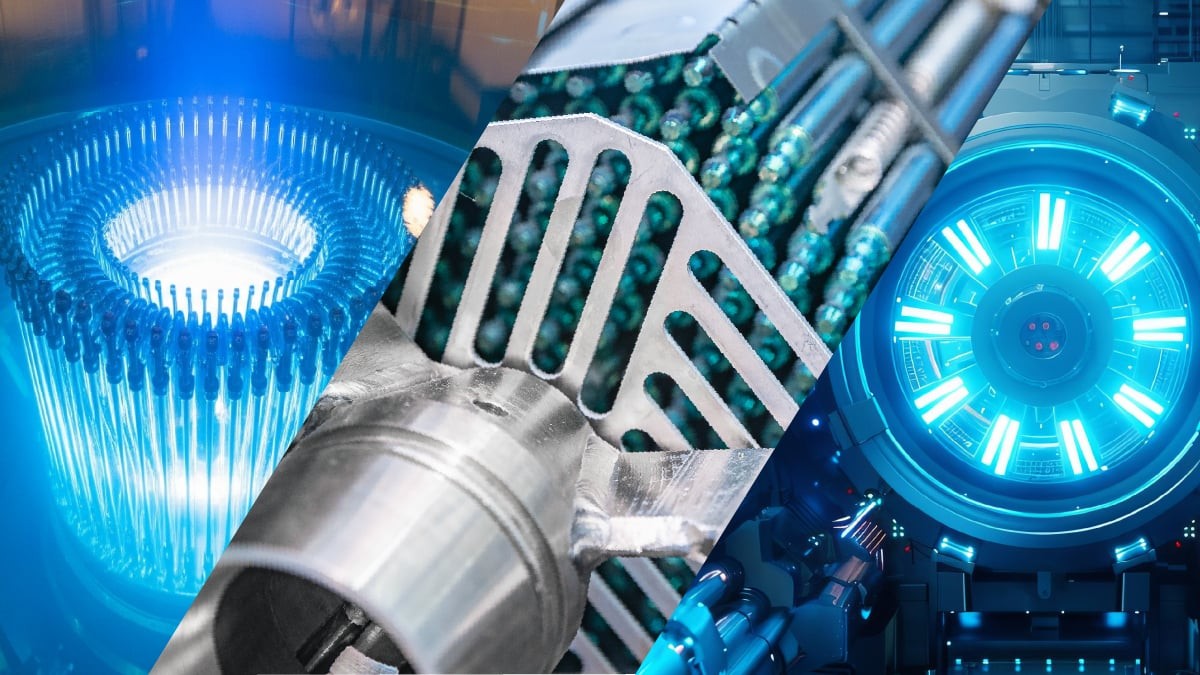
U.S. NRIC Selects 13 Nuclear Energy Launch Pad Projects
The U.S. Department of Energy (DOE)'s National Reactor Innovation Center (NRIC) announced on August 24 that 13 new projects have been selected for the Nuclear Energy Launch Pad program. NRIC is based at Idaho National Laboratory (INL). NRIC Director Brad Tomer stated that this round of selections reflects developers' growing commitment to advancing related technologies. The program will provide companies with a priority pathway to DOE authorization, as well as access to expert resources, facility conditions, and targeted regulatory support to adv...
2026-08-26