
Search Results
Keyword:fusion plasma

U.S. PACMAN AI Framework Achieves Millisecond-Level Control of Fusion Plasma
The PACMAN AI framework, developed by researchers at the U.S. Department of Energy's Princeton Plasma Physics Laboratory (PPPL) and Princeton University, has completed five experimental validations in real fusion experimental systems. The framework can complete data processing, state prediction, and control command output in approximately 20 milliseconds, addressing rapidly developing instabilities in fusion plasma. This is an artist's rendition of the PACMAN AI framework for fusion systems. (Illustration credit: Kyle Palmer / PPPL Communications Department) PACMAN stands for Prediction and Control via Machine Learning. Related design and preliminary experimental results have been published in...
2026-09-03

Two IPP studies reveal edge turbulence mechanisms in fusion plasmas from first principles
On August 10, 2026, two research teams at the Max Planck Institute for Plasma Physics (IPP) independently published findings that, for the first time, explain key phenomena in the extremely thin edge layer of fusion plasmas starting from fundamental physics equations. Both papers were published in Physical Review Letters, with one highlighted as an editor's suggestion. For stable operation of a fusion power plant, two requirements must be met simultaneously: on the one hand, the plasma at temperatures of around 100 million degrees Celsius must be effectively confined to achieve fusion ignition conditions; on the other hand, the generated heat must be distributed over a sufficiently large area to prevent damage to the device walls from excessive local heat loads. Whether this conflict can be resolved depends largely on a region only a few centimeters thick at the plasma edge.
2026-08-10
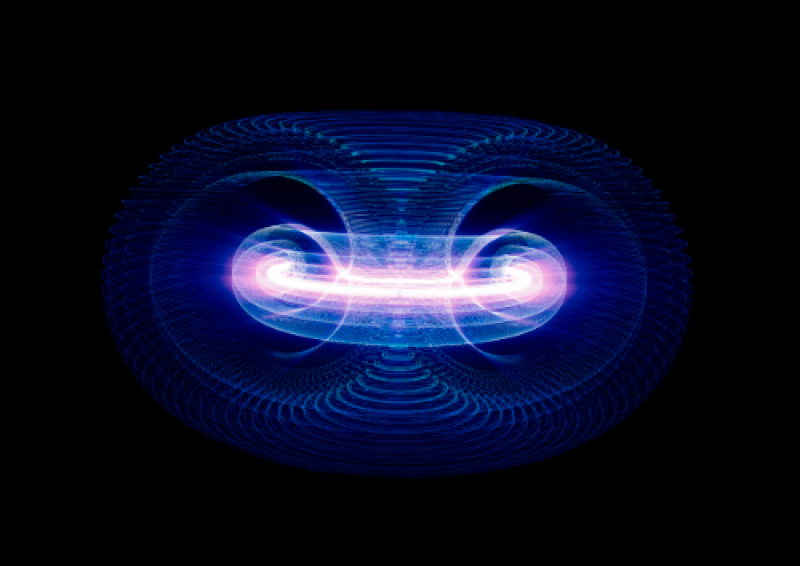
Harbin Fusion and Superconducting Industry Technology Innovation Alliance Established
On August 7, the inaugural meeting and first member assembly of the Harbin Fusion and Superconducting Industry Technology Innovation Alliance was held. Under the guidance of the Heilongjiang Provincial Department of Science and Technology and the Harbin Municipal Science and Technology Bureau, Harbin Institute of Technology (HIT) took the lead in establishing the Harbin Fusion and Superconducting Industry Technology Innovation Alliance. The alliance not only comprehensively integrates HIT's national-level advantageous research capabilities in fields such as robotics, advanced welding and joining, special composite materials, and extreme environment simulation, but also brings in local scientific innovation forces and industrial entities including Harbin Engineering University, the Heilongjiang Provincial Institute of Atomic Energy, and Harbin Electric Group. At the same time, it brings together the Institute of Plasma Physics of the Chinese Academy of Sciences, the Southwest Institute of Physics of Nuclear Industry,...
2026-08-07
UC Santa Barbara and Lawrence Livermore National Laboratory Collaborate to Accelerate Fusion Plasma Simulations with AI
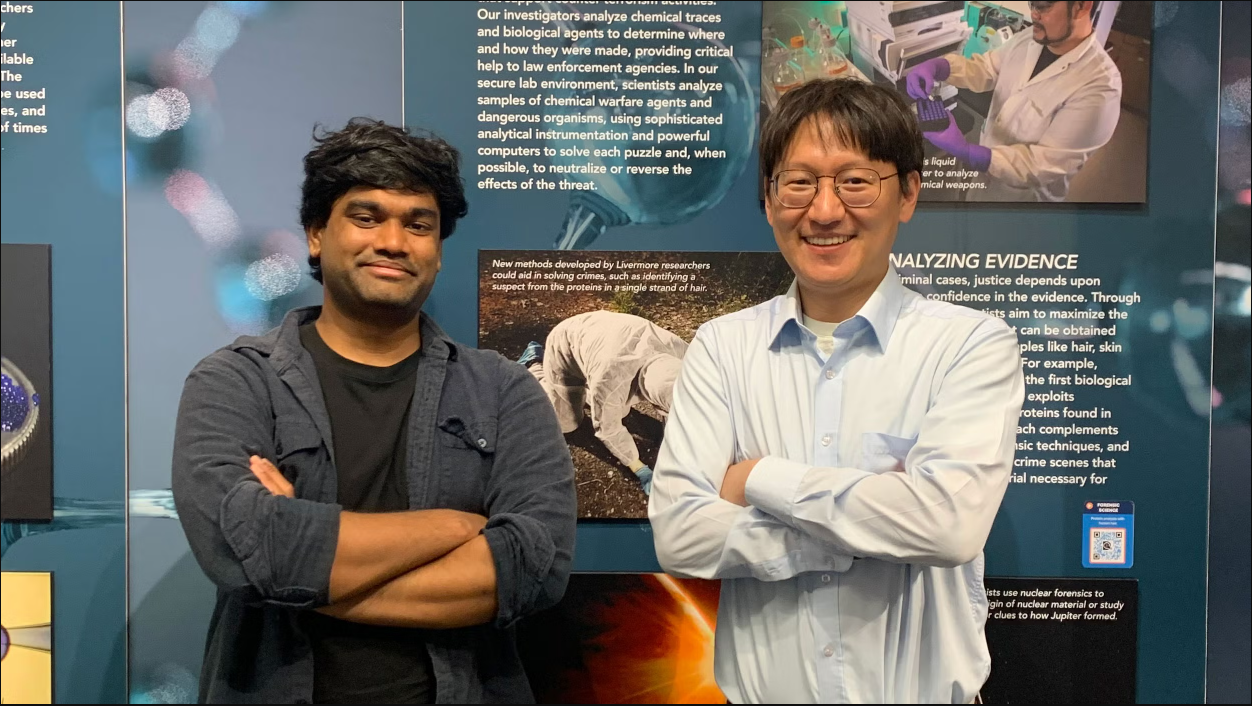
The University of California, Santa Barbara (UCSB) and Lawrence Livermore National Laboratory (LLNL) are launching a new collaboration to bring artificial intelligence into extreme plasma simulations, accelerating critical computations in nuclear fusion and high-energy-density physics research. Neel Sankaran (left), a doctoral student of UCSB Professor Haewon Jeong, poses with LLNL scientist Min Sang Cho (right). The project is led by the Department of Electrical and Computer Engineering at UC Santa Barbara...
2026-08-05

Japanese research team experimentally demonstrates that fusion plasma fluctuations can drive inward particle transport
August 3, 2026, a research team from The University of Tokyo and the National Institute for Fusion Science (NIFS) under the National Institutes of Natural Sciences announced that researchers have directly observed in experiments that low-frequency electric field fluctuations in high-temperature plasma confined by a dipole magnetic field can transport particles to the central region of the plasma. Plasma produced by the levitated dipole experiment device RT-1 (Ring Trap 1) Overall view of the RT-1 device (Kashiwa Campus, The University of Tokyo) The study was conducted using the levitated dipole experiment device Ring Trap 1 (RT-1) at The University of Tokyo. RT-...
2026-08-03