
Search Results
Keyword:radiation emergency
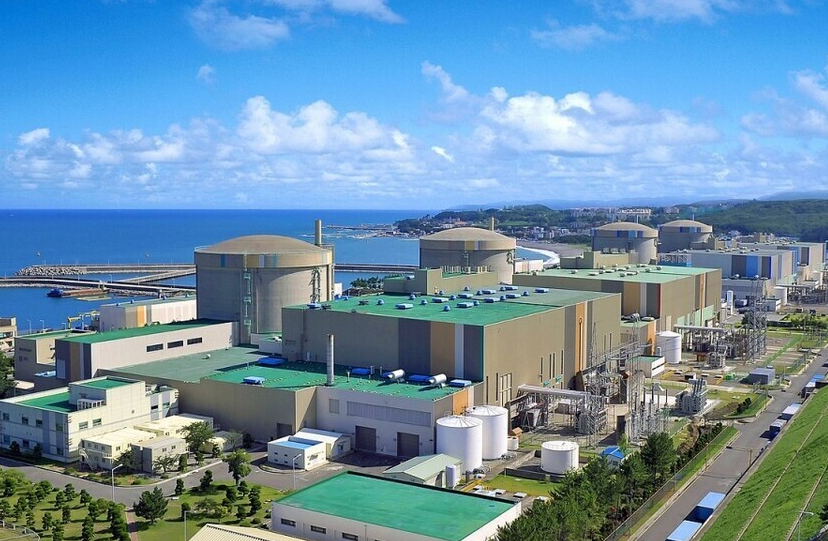
South Korea Conducts First Joint Radiation Emergency Exercise Involving Two Nuclear Power Plants Simultaneously
The Nuclear Safety and Security Commission (NSSC) of South Korea announced on September 10 that South Korea held the 2026 National Joint Radiation Disaster Prevention Exercise, simulating a radioactive material release accident at the Wolsong Nuclear Power Plant in Gyeongju, North Gyeongsang Province, and the simultaneous entry into a radiation emergency state at the Hanul Nuclear Power Plant in Uljin County, North Gyeongsang Province. Approximately 2,000 people participated in the exercise, including relevant South Korean central government departments, local governments, specialized agencies, relevant operating organizations, local organizations, and nearby residents. This exercise set up a compound disaster scenario of simultaneous radiation emergencies at multiple nuclear power plants for the first time. The exercise assumed that...
2026-09-12

Radiation Emergency Drill Conducted at Unit 6 of South Korea's Hanul Nuclear Power Plant
Korea Hydro & Nuclear Power (KHNP) recently conducted a comprehensive radiation disaster prevention drill at Unit 6 of its Hanul Nuclear Power Plant to test the emergency response system and on-site handling capabilities under radiation emergency conditions. According to the Hanul Nuclear Power Plant, the drill was held on September 3, organized in accordance with the evaluation guidelines established by the Korea Institute of Nuclear Safety (KINS) and based on the National Radiation Emergency Plan. The drill scenario was not disclosed in advance, and the evaluation methods were also adjusted, with a focus on verifying the unit's response capabilities under actual emergency scenarios. During the drill, all emergency personnel of Unit 6 at Hanul Nuclear Power Plant participated in the response. The scenario simulated a casualty incident occurring within the controlled area, with medical rescue operations organized, and a 3.2 MW mobile generator was used to inspect the operational capability of emergency facilities.
2026-09-04
China-led International Standard for Estimating RBE-Weighted Absorbed Dose from Acute Exposure Approved for Initiation
According to the International Organization for Standardization (ISO), the international standard ISO25600 "Estimation Method for RBE (Relative Biological Effectiveness)-Weighted Absorbed Dose from Acute Exposure," led by the China Institute of Atomic Energy, has been officially approved for initiation. This is a general methodology international standard led by China in the global field of nuclear and radiation emergency dose assessment. It can provide important support for the rapid estimation and evaluation of acute doses, decision-making on emergency protective actions, international notification and communication, as well as emergency training, exercises, and scientific research, helping to strengthen the scientific rigor and timeliness of global nuclear emergency response, and enhance response capability and standardization. Nuclear and radiation emergency response is a vital guarantee for the sustained and healthy development of the nuclear energy industry...
2026-08-31

Finland Launches Its First IAEA International Assessment of Radiation Emergency Preparedness
Finland has recently launched its first international assessment of radiation emergency preparedness. At the invitation of Finland's Ministry of Economic Affairs and Employment, an international expert team assembled by the International Atomic Energy Agency began assessing Finland's preparedness for radiation emergency response on August 25, with the work continuing through September 1. The assessment is coordinated by the Radiation and Nuclear Safety Authority of Finland. This authority also serves as the IAEA contact point and participates in this review as one of the assessed entities. The coordination group designated by Finland's Ministry of Economic Affairs and Employment is chaired by Karim Peltonen from the Radiation and Nuclear Safety Authority of Finland. The assessment employs the IAEA's Emergency Preparedness Review mechanism,...
2026-08-26

Jamaica Launches Graduate Training Program in Radiation Protection and Safety, Poised to Become a Regional Center of Excellence in the Caribbean
Jamaica's newly established graduate training program in radiation protection and safety is being viewed as an important platform for enhancing nuclear technology safety capabilities in the Caribbean region. Chris Ardouin, an International Atomic Energy Agency expert and Senior Scientist and Technical Manager of Public Health and Forensic Science at the National Radiation Science Centre of New Zealand, stated that the program demonstrates Jamaica's potential to become a regional center of excellence for radiation protection and safety training. The six-month program, implemented as the first graduate education course in radiation protection and safety under the framework of the University of the West Indies' short-term academic resources, is currently training 12 professionals from seven CARICOM member states, with a focus on enhancing regional...
2026-08-26

Uzbekistan Approves Radiation Accident Emergency Procedures for Nuclear Power Plants
Uzbekistan has approved radiation accident emergency procedures for nuclear power plants, specifying the handling procedures when nuclear power plants face the threat of or actually experience radiation accidents. The document was approved by the Industrial, Radiation and Nuclear Safety Committee under the Cabinet of Ministers, registered with the Ministry of Justice, and entered into force on August 20. The procedures apply to the siting, design, construction and operation stages of nuclear power plants, covering the conditions for activating emergency states, radiation dose rate criteria, operational information reporting processes, and requirements for emergency rescue organizations. According to the procedures, the emergency states of nuclear power plants are divided into two levels: emergency preparedness and emergency condition. When the former is activated, it generally means that the safe operation limits or conditions of the nuclear power plant have been exceeded, while the ionizing radiation dose rate has reached the corresponding threshold. If external natural or man-made events such as earthquakes, explosions, fires, or floods occur at the site and affect safety-related systems or safe operating conditions, an "emergency preparedness" state may also be declared.
2026-08-22
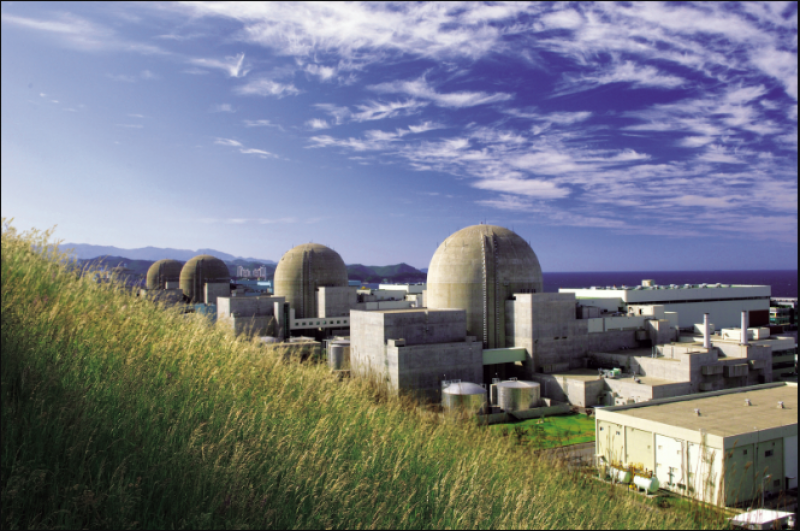
North Gyeongsang Province, South Korea, increases temporary radiation disaster shelters to 96
North Gyeongsang Province announced on August 11 that it has increased the number of temporary radiation disaster shelters from 56 to 96 to enhance resident evacuation and accommodation capabilities in nuclear accident scenarios. The expansion primarily targets the areas surrounding Uljin County, where the Hanul Nuclear Power Plant is located, focusing on addressing the shortage of nearby accommodation capacity and strengthening the reception capability for evacuees in areas related to the Hanul radiation emergency planning zone, including Uljin, Yeongyang, and Bonghwa. Previously, due to limited shelter capacity in Uljin County, approximately 33,000 people were expected to require evacuation in the event of a nuclear accident, while local shelters could only accommodate about 13,000 people. To meet accommodation needs, Uljin County also had to utilize 5 shelters in Gyeongju and 2 in Pohang, with long-distance transfers being unfavorable for rapid evacuation.
2026-08-12

Arab League Holds Second Technical Committee Meeting on Nuclear and Radiation Emergency Preparedness Roadmap, Focusing on Cross-Border Coordination and Alignment with IAEA Obligations
The General Secretariat of the League of Arab States held its second open-ended technical committee meeting at its headquarters from August 9 to 10, focusing on following up on the implementation of the Arab cooperation roadmap for nuclear and radiation emergency preparedness and response. The meeting was attended by representatives of Arab member states, the Arab Atomic Energy Agency (AAEA), and relevant Arab and international organizations, indicating that this issue has risen from mere technical cooperation to an important component of regional security governance. The core objective of the meeting is to enhance the coordination capacity and response capability of Arab countries in the face of nuclear accidents and radiological emergencies. As nuclear technology continues to expand in energy, medical, industrial, and scientific research applications, nuclear...
2026-08-10

Korea Hosts McSEE Dose Assessment Program Application Workshop to Enhance Radiation Emergency Medical Capabilities
The Korea Atomic Energy Research Institute announced that the National Radiation Emergency Medical Center recently held a workshop on the application of the Monte Carlo-based dose assessment program (McSEE) in the disaster prevention education and training room. This event is part of a research project to strengthen emergency care capabilities for radiation-injured patients, aiming to promote the application of new dose assessment technologies at radiation emergency sites and enhance the practical skills of medical staff and researchers. The workshop training was conducted by the research team of Professor Kim Chan-hyeong at Hanyang University. The team introduced the principles of Monte Carlo-based radiation dose assessment, the functions of the McSEE software and its application methods, and conducted case-based practical training around simulated radiation exposure accidents...
2026-08-01